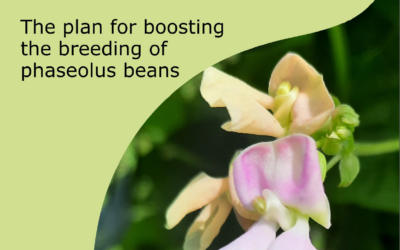
Pulses (edible dry seeds from legumes) are among the most important crops worldwide.
These legumes contain a diverse range of carbohydrates, some of which, such as RFOs
(raffinose family oligosaccharides), are considered antinutritional factors due to their negative
impact on digestion. An analytical method based on high-power ultrasound-assisted
extraction and HPLC analysis was developed and validated for the quantitative determination
of soluble carbohydrates (verbascose, stachyose, raffinose, sucrose, galactinol,
glucose, galactose, fructose, and myo-inositol) in common beans (Phaseolus vulgaris) and
peas (Pisum sativum). The proposed method is fast (extraction time: 1 min), reproducible
(RDS: 6.9%), accurate (97.5%), and environmentally sustainable. The method was applied
to local collections of P. vulgaris (n = 12) and P. sativum (n = 34), revealing similar qualitative
profiles but notable quantitative differences. In P. vulgaris, sucrose and stachyose were predominant,
while in P. sativum, verbascose stood out. The total sugar content was higher in
peas, especially in commercial varieties, which also showed elevated sucrose levels. Some
local varieties combined high sugar content with favorable relative levels between RFOs
and other sugars, making them valuable candidates for breeding programs. Linear discriminant
analysis enabled classification and prediction of species and varieties, confirming the
usefulness of soluble carbohydrates as tools for characterizing these plant materials.
paper
Chromosome-level dataset from de novo assembly of a Fabada common bean genotype using Illumina and PacBio technologies
Fabada is a traditional market class of common bean (Phaseolus vulgaris L.) cultivated in northern Spain, recognized for its distinctive seed phenotype with very large, white, and oblong seeds. High-throughput genotyping of this market class revealed that its genome is predominantly of Andean origin, with approximately 30 % introgression from the Mesoamerican gene pool. The de novo genome assembly of the A25 bean genotype, derived from the local cultivar ‘Andecha’ which belongs to the Fabada market class, is described. Two complementary technologies were used: PacBio (Sequel II) for long reads and Illumina (NovaSeq PE150) for short reads. The depth of coverage achieved was 112x for Illumina and 47x for PacBio. Genome assembly resulted in 468,9 Mbp (98.5 % BUSCO completeness), organized into 1363 scaffolds plus the mitochondrial and chloroplast genomes. Based on the reference genome (NCBI accession number GCF000499845.2), these scaffolds were organized into 11 chromosomes and 169 unplaced scaffolds. The mitochondrial genome was assembled based on that of P. vulgaris (NCBI accession number NC_045135). Two mitochondrial scaffolds were obtained, one of 371,437 bp, and the other of 11,183 bp. The chloroplast genome was assembled based on that of P. vulgaris (NCBI accession NC_009259.1), resulting in 161,310 bp. To the best of our knowledge, this is the first available genome of a common bean accession exhibiting recombination between the two major gene pools, Andean and Mesoamerican, and the second assembled genome of a European common bean.
Legume Generation Report 8
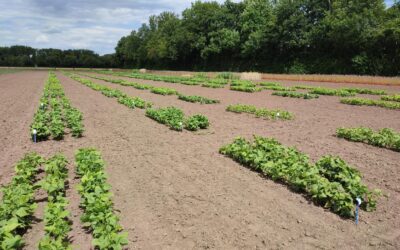
The purpose of this paper is to characterise protein crops and to discuss the challenges and opportunities for the genetic improvement of legumes in a changing environment. It relates to the pre-farm gate part of protein crop value chains. We hope to address in particular further public (such as the European Union) and private investors (breeders) and breeders in crop genetic improvement.
Underutilised crops in Europe: An interdisciplinary approach towards sustainable practices
In the context of a rapidly growing global population and significant climatic and environmental change, there is an urgent need to produce nutritious food in a sustainable manner. Some crops are underutilised in Europe, despite their suitability to local environments, viability for sustainable production and potential to improve diets. Rye (Secale cereale) has a long history of cultivation in Europe, yet is underutilised owing to complex historical, socio-cultural, socio-political, socio-economic and agronomic factors. This paper explores an innovative, cross-sectoral approach that harmonises existing datasets from archaeology, plant science, nutrition and policy, and establishes an interdisciplinary dialogue to tackle this challenge