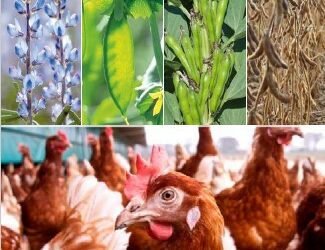
Livestock
How to increase the nutritional value of beans for pig and poultry diets
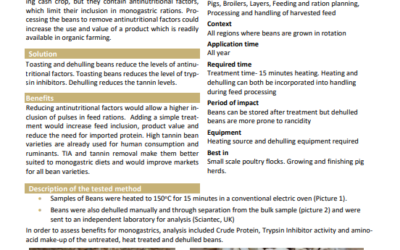
Heat treatment and dehulling effects on feed value of faba beans
Fish farm in Greece
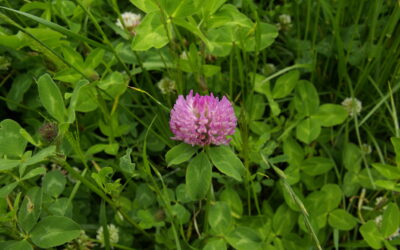
Red clover silage
Chemical composition Data in Table 1 show the important differences between typical red clover and perennial ryegrass silages based on observations made in the United Kingdom. The protein content of red clover is 35% higher than that of ryegrass and this allows...
High milk yields without soya? Yes we can.
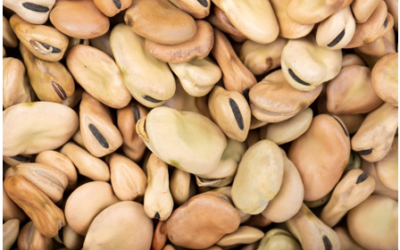
Nutritional value of grain legumes
Protein solubility is not a reliable indicator of rumen degradability Proteins in less commonly used grain legumes, such as in pea and lupin, are highly soluble and so the in sacco (nylon bag) technique over-estimates protein degradability because protein...
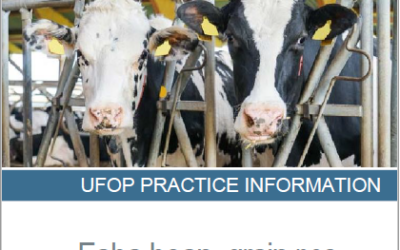
Faba bean, grain pea, sweet lupin and soybean for feeding cattle
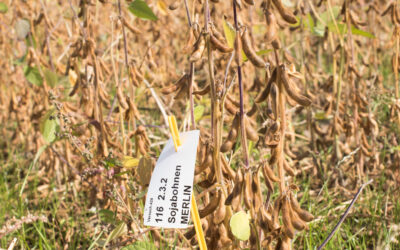
Agro-economic prospects for expanding soybean production beyond its current northerly limit in Europe
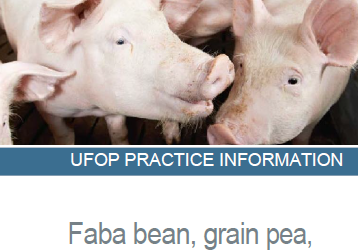
Faba bean, grain pea, sweet lupin and soybean for pig feeding
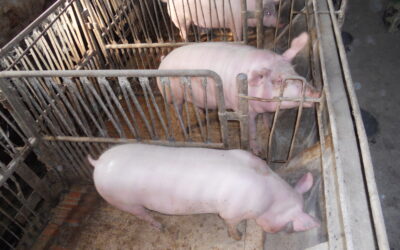
Feeding extruded soybean to pigs
Case study data Two experiments were conducted. The Danube White breed was used in the first, and a Danube White x Pietren cross was used in the second. The first experiment was performed using three treatments (I (control), II and III). The Treatment II group...
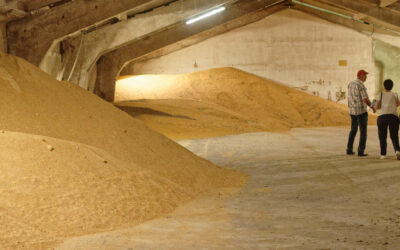
Cold-pressed soybean for poultry
Case study data We examined the effect of the feed used by three different egg producers. These egg producers are located in north-west and north-central Bulgaria. All three are specialised egg and poultry producers with their own feed mills. Two used imported...
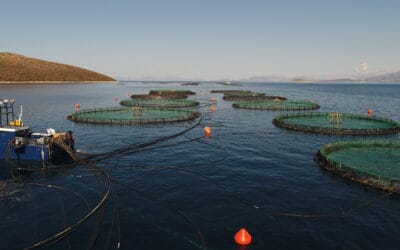
Legume quality requirements for fish feed
Outcome The operation of an efficient market for grain legumes in aquaculture value chains helps growers and suppliers of grain legumes who are interested in supporting the fish feed industry. Understanding the requirements is the foundation of tailoring crop...
Nitrogen partitioning and isotopic fractionation in dairy cows consuming diets based on a range of contrasting forages
Effects of mixtures of red clover and maize silages on the partitioning of dietary nitrogen between milk and urine by dairy cows
Reducing concentrate supplementation in dairy cow diets while maintaining milk production with pea-wheat intercrops
Comparison of grass and legume silages for milk production. 1. Production responses with different levels of concentrate
Forage intake, meal patterns, and milk production of lactating dairy cows fed grass silage or pea-wheat bi-crop silages
Milk production from silage: comparison of grass, legume and maize silages and their mixtures
Feeding lucerne to dairy cows
Outcome The inclusion of lucerne in a grass or maize-based forage ration reduces the need for feeding high protein rapeseed and/or soybean meal to high-performance dairy cows. The beneficial effect depends on the protein content of the grass or maize silage...
Feeding faba bean to poultry in practice
Home-grown faba bean for organic poultry Uwe Brede and Babett Löber grow field bean cultivar Bilbo on their organic farm on Domaen Niederbeisheim, near the German city of Kassel. They keep laying hens and young hens, together about 30,000 birds. 100% organic...
Feeding pea to poultry
Experience at the Vogt organic farm: peas for laying hen This farm in Lower Franconia in Germany converted to organic in 1987. Starting with 60 laying hens, the flock have been kept in a repurposed cowshed with an adjoining orchard meadow since 1991. The flock is now...
Feeding quality of faba bean for poultry
Nutritional components The nutritional components of faba bean are summarised in Table 1. Grain legumes are used in livestock feed primarily for their protein content. Faba bean with 12% moisture is about 26% protein. In addition to crude protein, faba bean is...