Crops
Over-wintering lupin
Unraveling the Function of Stress Kinase in the Progeny of Soybean Plants Grown from Low-Temperature Pretreated Seeds
New perspectives of post-GWAS analyses: From markers to causal genes for more precise crop breeding
Narrow-leaved lupin pot test for alkaline tolerance
Narrow-leaved lupin pot test for alkaline tolerance
Phaseolus vulgaris flower
Phaseolus vulgaris flower
Soybean flowering in the north: Combination of Chinese and European genetics could support better adaptation of soybean to northern latitudes
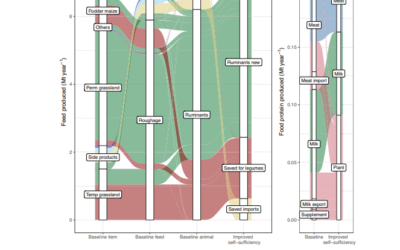
Swiss agriculture can become more sustainable and self-sufficient by shifting from forage to grain legume production
Alkaloid analysis in lupins
Genetic diversity in narrow-leafed lupin breeding after the domestication bottleneck
Multivariate genomic analysis and optimal contribution selection predicts high genetic gains in cooking time, iron, zinc and grain yield in common beans in East Africa
In vivo characterisation of field pea stem wall thickness using optical coherence tomography
Accuracy of selection in early generations of field pea breeding increases by exploiting the information contained in correlated traits
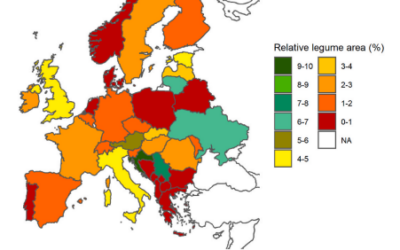
Grain legume production in Europe for food, feed and meat-substitution
Breeding for Biotic Stress Resistance in Pea
The European Legume Hub Community
Determination of isoflavones contents in soybean cotyledons, with near-infrared spectroscopy and chemometrics
Background Owing to their estrogenic properties, isoflavones from soybean seeds are of great interest for human health. However, secondary effects are ambiguous and concerns among French consumers rise because of their unwanted exposure. The cotyledon and embryo axis...
Explaining environmental influence on isoflavone accumulation in soybean cotyledons and embryo axis
Background Isoflavones first accumulate in the embryo axis. Once a plateau is reached, isoflavones begin to accumulate in the cotyledons, where they are found in lower concentrations, but in greater quantities. This shift is associated with a difference in...
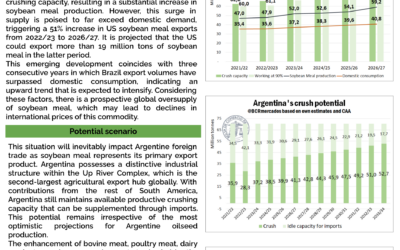
Argentina’s soybean meal: A threat or an opportunity in the sight?
While crushing in Argentina has stagnated over the last 15 years, the growing demand for soybean oil to produce hydrotreated vegetable oil (HVO) in the United States is driving a significant expansion of its crushing capacity, resulting in a substantial increase in...
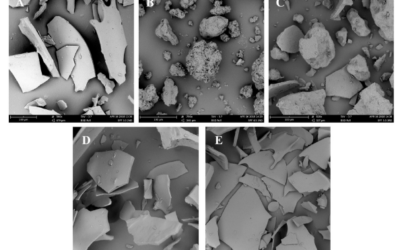
Functional properties of mildly fractionated soy protein as influenced by the processing pH