Crops
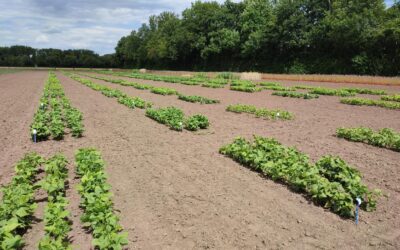
Differences in wilting in soybean field trial in Austria during a heatwave in 2026.
Progressing the breeding of lentil
This report sets out the progress made in boosting the breeding of lentil in the first 24 months of the Legume Generation project. It describes the establishment and progress of the Lentil Innovation Community (IC); the harmonisation of phenotyping protocols across Europe; the completion of the first cycle of multi-environment field trials; the launch of the second validation cycle; and the initiation of breeding tools and early demonstration activities.
The Lentil IC brings together partners from Greece, Italy, France, Germany, and the Netherlands in a coordinated platform for data, seed, and knowledge exchange. This collaboration with germplasm mainly from IPK, ICARDA, and information and lines from other previous projects such as INCREASE, Linsel, and other initiatives was assembled to broaden the narrow genetic base of lentil cultivated in Europe. Key breeding priorities included yield, drought tolerance, earliness, seed quality, yield stability, cold tolerance, and disease resistance.
Progressing the breeding of lupin
Lupins play an important role in European agriculture for food and feed protein production, especially in regions with poor sandy soils and frequent pre-summer drought. In the Legume Generation project, the Lupin Innovation Community (LUPIC) works together to improve grain yield and yield stability, which is urgently needed to serve farmers´ needs. Since the genepool of sweet lupins is genetically very narrow, the LUPIC approach is to develop new/better traits from bitter lupins to finally breed sweet lupin cultivars.
Jimsonweed threatens the harvest
This video was recorded as part of the SoniaProQ course. It shows how jimsonweed is structured and why it is dangerous for humans and animals. Even small quantities can lead to contamination of the crop. It is therefore important to ensure clean production -from the field through to consistent monitoring of the harvested crop.
Soya production – crop quality
This video was recorded as part of the SoniaProQ course. It shows under which conditions soya grows best and how it can be optimally harvested and stored. Gentle drying is crucial for further processing. Regional, sustainable, and non-GM soybean cultivation is now possible in Austria – what is still lacking, however, is equally regional processing. This requires sound knowledge of the soybean.
SoniaProQ – strengthening regional soya processing
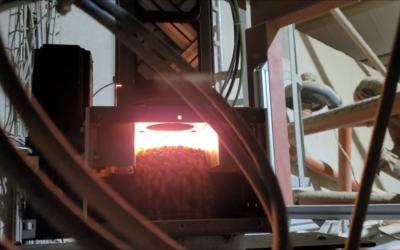
This video was recorded as part of the SoniaProQ course. It shows what challenges exist in regional soya processing – in particular, over-processing occurs frequently. The SoniaProQ project therefore aims to develop inline measurement sensors to strengthen and better monitor regional processing.
Soya production – processing products
This video was recorded as part of the SoniaProQ course. It shows what types of soya feed products exist and how they differ. In general, the residual fat content determines which processing product is produced soybean meal, soybean cake, or soybean oil.
Soya for livestock
This video was recorded as part of the SoniaProQ course. It shows that soya is an optimal feed due to its high protein and energy content as well as its high biological value. However, when fed raw, it can be problematic for certain animal species – as trypsin inhibitors impair nutrient absorption. To reduce these, the soya must be toasted, whereby an optimal degree of roasting is decisive.
Course Video
his video was recorded as part of the SoniaProQ course. The university course “Fundamentals of Soya Processing and Utilisation in Animal Production” ran from 26 February 2025 to 24 September 2025 and covered a broad range of topics – from soybean cultivation and basic knowledge of animal nutrition to the presentation of the latest technologies in small-scale roasting plants.
What is NIRS
This video was recorded as part of the SoniaProQ course. It shows how near-infrared spectroscopy can measure parameters in the soybean to assess feed quality. Certain measurement methods also allow the digestibility of the feed to be analysed.
Progressing the breeding of clover
This report sets out the progress that the Legume Generation Clover Innovation Community made up until August 2025 in boosting the breeding of clovers (Trifolium repens) and red clover (Trifolium pratense). These are two key forage legumes in agricultural systems.
Towards A Legume Renaissance: A practical European roadmap for fava beans for food and feed
This report presents a practical European roadmap to strengthen and scale protein crops, using fava beans as a concrete lens to show what is possible across both food and feed. Co-created with farmers (conventional, organic, regenerative), input providers, processors, retailers, food service, researchers and civil society, it maps today’s barriers and sets out coordinated policy and market solutions that work across farming systems. It translates these insights into concrete recommendations for key EU and national policy frameworks, including the CAP, CMO, NRP, ECF, and the Public Procurement Directive. By focusing in depth on fava beans while keeping recommendations transferable to other legumes, the roadmap shows how protein crops can reduce dependence on imported feed and fertilisers, improve soil health and biodiversity, and boost farm profitability and resilience. It quantifies the impact of these measures on farmer incomes, production volumes and strategic autonomy, and illustrates what a “Legume Renaissance” could deliver for European agriculture and diets by 2040.
Progressing the breeding of phaseolus bean
This report documents the progress that has been made up until August 2024 by Legume Generation to boost the breeding of phaseolus beans.
Our activities are guided by the expectations of the breeders of our innovation community. Our innovation community consists of 20 partners with currently 11 breeding and 13 pre-breeding programmes. By addressing their demands, we will gain improved phaseolus crops that compete better with other crops on farms. Phaseolus bean encompasses several crops which we consider in our work: Common bean (Phaseolus vulgaris L.) as snap (vegetable or French bean) and dry bean. There are two growing forms for each: bush and pole bean each. Common bean is also cultivated in intercropping for feed. The scarlet runner bean (Phaseolus coccineus L.) is a pole bean grown for both snap and dry beans.
Progressing the breeding of soybean
Soybean is the key legume crop in European agriculture for food and feed protein production. In the Legume Generation project (Horizon Europe), the European Soybean Innovation Community with its major breeding programmes have joined forces to boost soybean breeding. As there is a growing need for improved varieties, the project supports the innovation community in its breeding and innovation efforts for better adaptation to European growing conditions, competitive yield performance, and improved end-use quality for food production.
Chickpea Variety Assessment in Austria’s Arid Growing Region: Growth, Yield, and Chemical Composition
Chickpea, a high-quality protein source, is still rarely cultivated in Austrian agriculture, although its high drought tolerance would make it a suitable alternative crop in the eastern arid growing regions, where climate change increasingly causes drought stress. Most European countries, including Austria, are still heavily dependent on imports, with access to chickpea varieties that are adapted to local environmental conditions being limited. In this study, 24 different foreign chickpea varieties of both the Kabuli and the Desi types were grown and assessed in a field trial in the arid Austrian growing region Marchfeld in 2023. The varieties differed in phenotypical appearance, plant development, yield, yield components, and chemical composition of the harvested material. Measured yield at normalized 86% dry matter content ranged between 16 and 24 dt/ha, with the three highest yielding varieties being of the Kabuli type. Protein content ranged from 19.2% to 23.0%. Seeds from varieties of the Kabuli type displayed a higher total saccharide content, whereas those of the Desi type exhibited a higher polyphenol content. The findings from our field trial suggest that chickpea holds promise as a viable alternative crop for dry regions in Eastern Austria.
Keywords: chickpea, drought tolerance, climate change adaptation, plant-based protein, variety characteristics
Crossing of two pea lines in a greenhouse by manual exposure of the anthers of one flower and application to the stigma of another closed flower
Lupin field trial after first snow and frost period in winter 2025 in southern Germany
Lupin field trial after first snow and frost period in winter 2025 in southern Germany
Characterisation and breeding of legume crops
The purpose of this paper is to characterise protein crops and to discuss the challenges and opportunities for the genetic improvement of legumes in a changing environment. It relates to the pre-farm gate part of protein crop value chains. We hope to address in particular further public (such as the European Union) and private investors (breeders) and breeders in crop genetic improvement.
SONIA-ProQ: Real-Time Soya Processing Analysis
The Legume Generation Innovation Communities
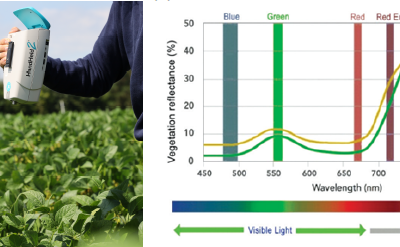
Phenotyping of European soybean varieties with different time to maturity for drought tolerance