plain

Utilising the pre-crop effect of grain legumes

Utilising the pre-crop effect of grain legumes

  Components of the pre-crop effect The pre-crop effect includes two elements: the nitrogen effect and the break crop effect. The nitrogen effect is the provision of nitrogen to the following crop through the nitrogen carried over in the residue from the previous...

read more
Growing faba bean and pea in the Nordic region

Growing faba bean and pea in the Nordic region

  Outcome Useful knowledge on cultivating faba bean and pea under Nordic conditions.   Uses of the crops The most common grain legumes grown in the Nordic countries are pea (Pisum sativum L.) and faba bean (Vicia faba L.). Both provide a good break crop in...

read more

Growing soybean in north-western Europe

  The potential for adapting soybean adaptation to north-western Europe The cultivation of soybean in Europe has increased considerably aided by cultivars that mature early. Matching cultivar to location combined with optimal agronomic practices (sowing date,...

read more

Sclerotina stem rot in soybean

  Sclerotina is potentially the most damaging disease that occurs in all regions where soybean is grown. The infection results in yield losses and contamination of seed with sclerotia. Crop rotation and sowing of disease-free seed are the main control measures....

read more
Why farmers grow lupin

Why farmers grow lupin

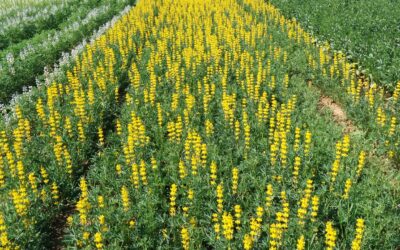
  The survey and respondents An online survey with conventional and organic farmers who cultivated lupin was conducted across Germany within the ‘Demonstration Network for Cultivation and Utilisation of Lupin’ between October and December 2019. In total, 67...

read more

Forage legumes for a cool climate

  Protein from alternative forages Increasing on-farm plant protein production addresses emerging consumer expectations. Producing more high-protein forage reduces reliance on imported protein sources. This reduces the carbon footprint of the feed and reduces the...

read more
The bean seed beetle in faba bean

The bean seed beetle in faba bean

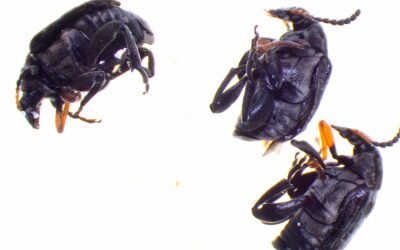
  The lifecycle An understanding of the lifecycle is the foundation of control strategies and risk assessments. The beetle has one generation per year. Adults hibernate overwinter in leaf litter and under bark before emerging in April/May. Diapausing adults leave...

read more
Red clover silage

Red clover silage

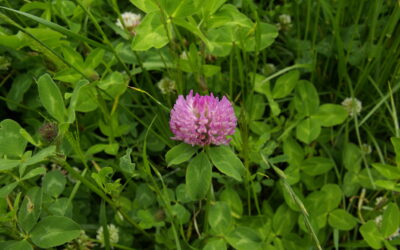
  Chemical composition Data in Table 1 show the important differences between typical red clover and perennial ryegrass silages based on observations made in the United Kingdom. The protein content of red clover is 35% higher than that of ryegrass and this allows...

read more
There is a grain legume for every field

There is a grain legume for every field

  Outcome The main outcome is the identification of a suitable grain legume species for a given farming situation or field. Selecting the right kind of legume crop can affect the yield potential. Length and warmth of growing season The first thing to consider is...

read more
Dehulled grain legumes for food

Dehulled grain legumes for food

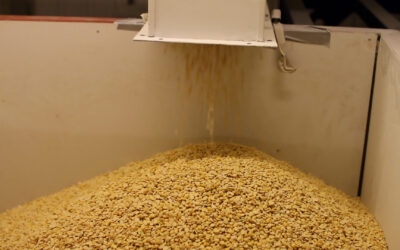
  Goal of dehulling Is there a customer requirement for dehulling? Is there a strong market for dehulled seeds for food products and processing? If the answer is yes to any of the questions, then dehulling is something to consider. The main processing goal is to...

read more
Effect of soybean cropping on floral diversity

Effect of soybean cropping on floral diversity

  Background Agroecosystems are biodiversity-depleted ecosystems. The expansion of arable land and the intensification of its use has displaced natural habitats and reduced the biodiversity of entire landscapes. Since agriculture dominates land use over most of...

read more
Cultivar selection for spring faba bean

Cultivar selection for spring faba bean

  This article explains the range of traits available to growers in modern cultivars. It provides examples of varieties in which the respective traits are particularly pronounced. These example varieties are taken from the descriptive list of varieties (BSL) of...

read more
Effects of soybean cropping on arthropods

Effects of soybean cropping on arthropods

  Background Many agroecosystems are biodiversity-depleted ecosystems. The expansion of arable land and the intensification of its use has displaced natural habitats and reduced the biodiversity of entire landscapes. Since agriculture dominates land use over most...

read more
Maize and runner bean intercropping

Maize and runner bean intercropping

  The combination of maize and runner bean (Phaseolus vulgaris var. vulgaris), which originated in Latin America, has this potential and has been the subject of more intensive research in Germany and Switzerland for several years. Runner bean is closely related...

read more
Nutritional value of grain legumes

Nutritional value of grain legumes

  Protein solubility is not a reliable indicator of rumen degradability Proteins in less commonly used grain legumes, such as in pea and lupin, are highly soluble and so the in sacco (nylon bag) technique over-estimates protein degradability because protein...

read more
Feeding extruded soybean to pigs

Feeding extruded soybean to pigs

  Case study data Two experiments were conducted. The Danube White breed was used in the first, and a Danube White x Pietren cross was used in the second. The first experiment was performed using three treatments (I (control), II and III). The Treatment II group...

read more

Valuing faba bean and pea for feed

  Outcome Numerous scientific studies show that livestock can be successfully fed with protein-rich cool-season grain legumes such as faba bean, pea and others. On the basis of the ‘Löhr substitution method’, it is possible to compare different feedstuffs with...

read more
Cold-pressed soybean for poultry

Cold-pressed soybean for poultry

  Case study data We examined the effect of the feed used by three different egg producers. These egg producers are located in north-west and north-central Bulgaria. All three are specialised egg and poultry producers with their own feed mills. Two used imported...

read more
Water use and irrigation in soybean

Water use and irrigation in soybean

  Water requirements at growth stages Soybean uses water efficiently. Depending on weather and soil, it uses 400–700 mm water as rainfall, irrigation or from soil to form a yield of 3 tonnes/ha. Soybean uses 1,300 to 2,300 tonnes of water per tonne of soybean...

read more
Irrigation of lupin

Irrigation of lupin

  Lupinus albus cultivation Lupin is a promising crop for Greece. It can play a role in livestock feeding in particular. Lupin seeds have a high protein content (up to 44%) and they are also a rich source of calcium, iron, magnesium and phosphorus. Due to its...

read more
Disease control in faba bean

Disease control in faba bean

  Outcome A better understanding of these diseases in faba bean enables growers to obtain higher yields through the targeted use of fungicides. Yields are more secure and unnecessary prophylactic fungicide measures can be avoided. This protects the environment...

read more
Thermal treatment of faba bean for flavour improvement

Thermal treatment of faba bean for flavour improvement

  Outcome This article provides useful information on how to denature flavour-affecting enzymes when developing food products from faba beans.   Off-flavours in faba bean Volatile compounds (e.g., aldehydes, alcohols, alkanes, ketones and aromatic...

read more
Privacy Overview

This website uses cookies so that we can provide you with the best user experience possible. Cookie information is stored in your browser and performs functions such as recognising you when you return to our website and helping our team to understand which sections of the website you find most interesting and useful.