
Crops
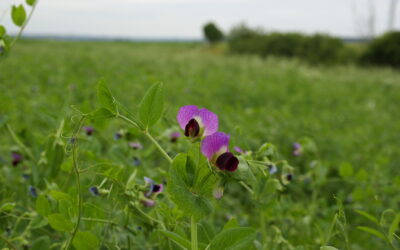
Utilising the pre-crop effect of grain legumes
Components of the pre-crop effect The pre-crop effect includes two elements: the nitrogen effect and the break crop effect. The nitrogen effect is the provision of nitrogen to the following crop through the nitrogen carried over in the residue from the previous...
Intercropping legumes with rapeseed to reduce nitrogen and pesticide use in a 10-year diversified cropping system in Champagne, France
Intercropping legumes with rapeseed to reduce nitrogen inputs and pesticide use and improve profitability
Diversification of cereal-based rotations with soybean as a second crop
Increasing feed production using legume and cereal mixtures as a second crop
Production constraints and opportunities: A Delphi study within the Legume Translated consortium
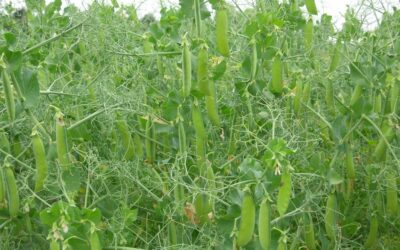
Growing faba bean and pea in the Nordic region
Outcome Useful knowledge on cultivating faba bean and pea under Nordic conditions. Uses of the crops The most common grain legumes grown in the Nordic countries are pea (Pisum sativum L.) and faba bean (Vicia faba L.). Both provide a good break crop in...
Continental and global effects
An application of life-cycle assessment (LCA) to legume cropping
Effects of legume crops on biodiversity
The role of legume production and use in European agri food systems
Pulses in monogastric rations

Grass and clover bioprocessing in Scotland
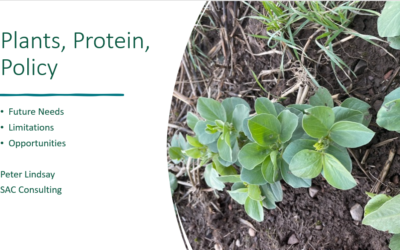
Plants, protein, policy
Growing soybean in north-western Europe
The potential for adapting soybean adaptation to north-western Europe The cultivation of soybean in Europe has increased considerably aided by cultivars that mature early. Matching cultivar to location combined with optimal agronomic practices (sowing date,...