Ageing, microbes and health
Paul W. O'Toole
05.03.2026
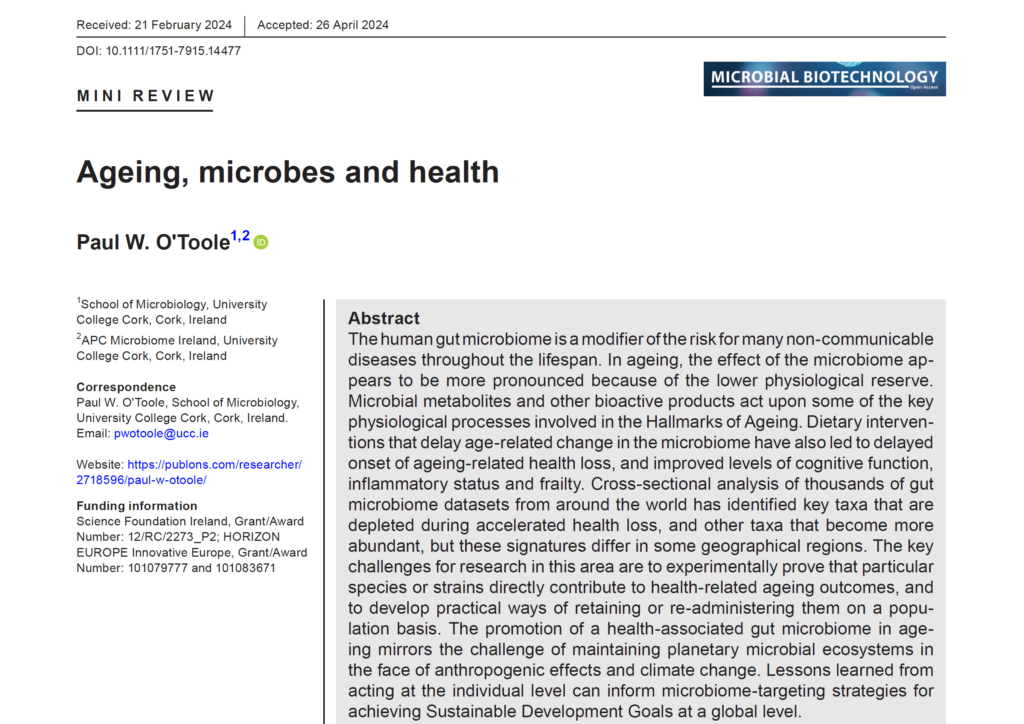
The human gut microbiome is a modifier of the risk for many non-communicable diseases throughout the lifespan. In ageing, the effect of the microbiome appears to be more pronounced because of the lower physiological reserve. Microbial metabolites and other bioactive products act upon some of the key physiological processes involved in the Hallmarks of Ageing. Dietary interventions that delay age-related change in the microbiome have also led to delayed onset of ageing-related health loss, and improved levels of cognitive function, inflammatory status and frailty. Cross-sectional analysis of thousands of gut microbiome datasets from around the world has identified key taxa that are depleted during accelerated health loss, and other taxa that become more abundant, but these signatures differ in some geographical regions. The key challenges for research in this area are to experimentally prove that particular species or strains directly contribute to health-related ageing outcomes, and to develop practical ways of retaining or re-administering them on a Population basis. The promotion of a health-associated gut microbiome in ageing mirrors the challenge of maintaining planetary microbial ecosystems in the face of anthropogenic effects and climate change. Lessons learned from acting at the individual level can inform microbiome-targeting strategies for achieving Sustainable Development Goals at a global level.
Downloads
About this article
Paul W. O'Toole
For matters related to publisher, citation and copyright, please refer to the original article.
The content is solely the responsibility of the authors. No warranties, expressed or implied, are made with respect to the information provided. Information relating to the use of plant protection products (pesticides) must be checked against the product label or other sources of product registration information.
0 Comments