Funded by the European Union (EU-flag+text)
Protein crops for Scotland
Bean weevil in faba bean
Scenarios for the protein transition in Europe
Growing faba beans for certified seed
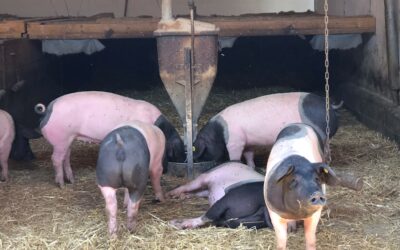
Peas in pig feed
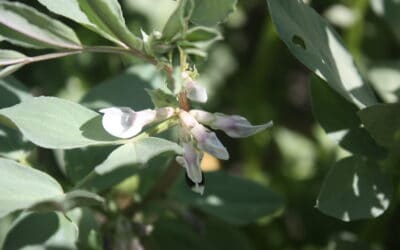
Inoculating legumes
Sowing time for soybean
Rapid germination and emergence needs warm soils Soybean is a warm-season legume. It is similar to sunflower, maize or sorghum in its response to temperature. Soybean seedlings and young plants are particularly vulnerable to cool conditions. Laboratory studies...
Feeding quality of pea for poultry
Nutritional components Pea is used in livestock feed primarily because of its protein content. The dry matter is about 24% protein and also contains energy-rich ingredients such as starch, oil and sugar (Table 1). The nutrient contents vary depending on growing...
Painted lady in soybean production
Cultivation of white lupin
Decision-making aids White lupin (Figure 1) is the most valuable protein crop after soybean for animal feed and human nutrition due to the high protein content and good amino acid profile. The yields are usually around 3 t/ha, typically varying from 2 to 4 t/...
Establishing high-yielding faba bean
Outcome Successful establishment of the crop supported by adequate soil water throughout the growing period provides the foundation of exceptionally high yields. Principles The overall purpose of managing establishment is to produce a fully functioning crop canopy...
Feeding pea to dairy cows
Outcome Soya can be successfully substituted with peas in dairy cows without affecting milk output or compositional quality. However, this is highly dependent on stage of lactation and yield. Pea can be used as the sole protein source for herds with moderate milk...
Feeding faba bean to dairy cows
Outcome Soya can be substituted using faba bean in dairy cow rations without affecting milk output or compositional quality. Successful use of faba bean depends on the level of substitution and being able to balance rations to maintain rumen bypass protein...
Mechanical weed control in soybean
Demonstration of mechanical weeding machines
On-farm soybean processing – Toasting soy for pig fattening
Biological nitrogen fixation in legumes
Legumes are the most important hosts of biological nitrogen fixation in terrestrial ecosystems, especially agricultural ecosystems. Nitrogen fixed by legumes is an alternative to synthetically-fixed nitrogen in fertilisers. Because of BNF, introducing legumes...
Inter-row cultivation in soybean
Outcome Inter-row cultivation suppresses weeds between rows and loosens the soil surface. This improves soil aeration, reduces water evaporation, and breaks soil crusts. This has a positive effect on the microorganisms, as well as on the number and activity of...
Alternatives to soya for dairy cows
Outcome Soybean meal can be replaced as a concentrated protein source for dairy cows without compromising milk yield or quality. There may be economic benefits depending on the price of soya and other protein sources. Switching to other high-protein feed...
Inoculation of soybean seed
Outcome If properly inoculated, biological nitrogen fixation (BNF) in soy can fully cover the nitrogen fertiliser needs of the crop. Inoculation typically increases the grain yield and the protein concentration by 40 – 60%. This treatment costs in Central...
Threshing soybean properly
Soybean in the course of a year