
Soybean
Differences in wilting in soybean field trial in Austria during a heatwave in 2026.
Jimsonweed threatens the harvest
This video was recorded as part of the SoniaProQ course. It shows how jimsonweed is structured and why it is dangerous for humans and animals. Even small quantities can lead to contamination of the crop. It is therefore important to ensure clean production -from the field through to consistent monitoring of the harvested crop.
Soya production – crop quality
This video was recorded as part of the SoniaProQ course. It shows under which conditions soya grows best and how it can be optimally harvested and stored. Gentle drying is crucial for further processing. Regional, sustainable, and non-GM soybean cultivation is now possible in Austria – what is still lacking, however, is equally regional processing. This requires sound knowledge of the soybean.
SoniaProQ – strengthening regional soya processing
This video was recorded as part of the SoniaProQ course. It shows what challenges exist in regional soya processing – in particular, over-processing occurs frequently. The SoniaProQ project therefore aims to develop inline measurement sensors to strengthen and better monitor regional processing.
Soya production – processing products
This video was recorded as part of the SoniaProQ course. It shows what types of soya feed products exist and how they differ. In general, the residual fat content determines which processing product is produced soybean meal, soybean cake, or soybean oil.
Soya for livestock
This video was recorded as part of the SoniaProQ course. It shows that soya is an optimal feed due to its high protein and energy content as well as its high biological value. However, when fed raw, it can be problematic for certain animal species – as trypsin inhibitors impair nutrient absorption. To reduce these, the soya must be toasted, whereby an optimal degree of roasting is decisive.
Course Video
his video was recorded as part of the SoniaProQ course. The university course “Fundamentals of Soya Processing and Utilisation in Animal Production” ran from 26 February 2025 to 24 September 2025 and covered a broad range of topics – from soybean cultivation and basic knowledge of animal nutrition to the presentation of the latest technologies in small-scale roasting plants.
What is NIRS
This video was recorded as part of the SoniaProQ course. It shows how near-infrared spectroscopy can measure parameters in the soybean to assess feed quality. Certain measurement methods also allow the digestibility of the feed to be analysed.
Towards A Legume Renaissance: A practical European roadmap for fava beans for food and feed
This report presents a practical European roadmap to strengthen and scale protein crops, using fava beans as a concrete lens to show what is possible across both food and feed. Co-created with farmers (conventional, organic, regenerative), input providers, processors, retailers, food service, researchers and civil society, it maps today’s barriers and sets out coordinated policy and market solutions that work across farming systems. It translates these insights into concrete recommendations for key EU and national policy frameworks, including the CAP, CMO, NRP, ECF, and the Public Procurement Directive. By focusing in depth on fava beans while keeping recommendations transferable to other legumes, the roadmap shows how protein crops can reduce dependence on imported feed and fertilisers, improve soil health and biodiversity, and boost farm profitability and resilience. It quantifies the impact of these measures on farmer incomes, production volumes and strategic autonomy, and illustrates what a “Legume Renaissance” could deliver for European agriculture and diets by 2040.
Progressing the breeding of soybean
Soybean is the key legume crop in European agriculture for food and feed protein production. In the Legume Generation project (Horizon Europe), the European Soybean Innovation Community with its major breeding programmes have joined forces to boost soybean breeding. As there is a growing need for improved varieties, the project supports the innovation community in its breeding and innovation efforts for better adaptation to European growing conditions, competitive yield performance, and improved end-use quality for food production.
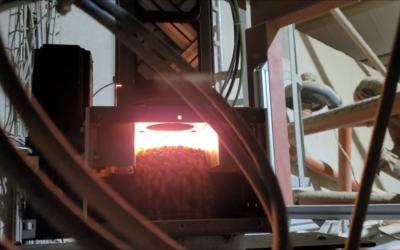
SONIA-ProQ: Real-Time Soya Processing Analysis
The Legume Generation Innovation Communities
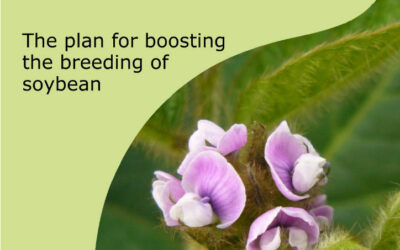
The plan for boosting the breeding of soybean
Soybean after 405mm rain
Результат дослідження «Механіка – не проти хімії при вирощуванні сої в Україну»
Spermidine and other functional phytochemicals in soybean seeds: Spatial distribution as visualized by mass spectrometry imaging
Unraveling the Function of Stress Kinase in the Progeny of Soybean Plants Grown from Low-Temperature Pretreated Seeds
Soybean flowering in the north: Combination of Chinese and European genetics could support better adaptation of soybean to northern latitudes
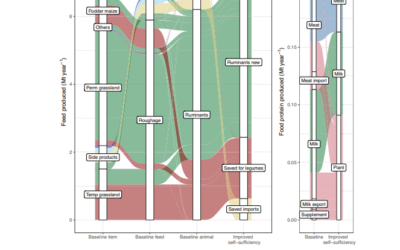
Swiss agriculture can become more sustainable and self-sufficient by shifting from forage to grain legume production
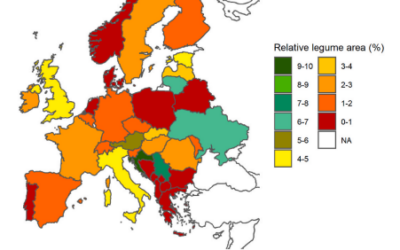
Grain legume production in Europe for food, feed and meat-substitution
The European Legume Hub Community
Determination of isoflavones contents in soybean cotyledons, with near-infrared spectroscopy and chemometrics
Background Owing to their estrogenic properties, isoflavones from soybean seeds are of great interest for human health. However, secondary effects are ambiguous and concerns among French consumers rise because of their unwanted exposure. The cotyledon and embryo axis...
Explaining environmental influence on isoflavone accumulation in soybean cotyledons and embryo axis
Background Isoflavones first accumulate in the embryo axis. Once a plateau is reached, isoflavones begin to accumulate in the cotyledons, where they are found in lower concentrations, but in greater quantities. This shift is associated with a difference in...