Food

Towards A Legume Renaissance: A practical European roadmap for fava beans for food and feed

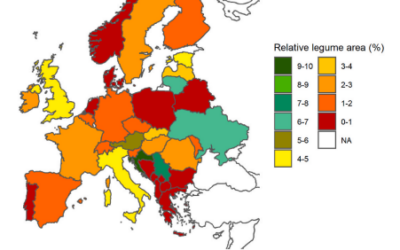
This report presents a practical European roadmap to strengthen and scale protein crops, using fava beans as a concrete lens to show what is possible across both food and feed. Co-created with farmers (conventional, organic, regenerative), input providers, processors, retailers, food service, researchers and civil society, it maps today’s barriers and sets out coordinated policy and market solutions that work across farming systems. It translates these insights into concrete recommendations for key EU and national policy frameworks, including the CAP, CMO, NRP, ECF, and the Public Procurement Directive. By focusing in depth on fava beans while keeping recommendations transferable to other legumes, the roadmap shows how protein crops can reduce dependence on imported feed and fertilisers, improve soil health and biodiversity, and boost farm profitability and resilience. It quantifies the impact of these measures on farmer incomes, production volumes and strategic autonomy, and illustrates what a “Legume Renaissance” could deliver for European agriculture and diets by 2040.
read more

Soy and the gut microbiome: a bi-directional relationship shaping nutrition and health

The gut microbiome is a transducer of the health effects of many food ingredients because of its ability to convert them into health-impacting compounds. Plant-forward diets and plant ingredients are recognized as health promoting, with recent added impetus provided by the drive to provide consumers with more sustainable protein sources than meat. Soy-based foods are good protein sources, and they contain a variety of other ingredients such as fibre that can impact the microbiome. This review explores the health benefits reported for soy-containing foods and the role of microbiome involvement in health effects. It describes the bi-directional relationship between dietary soy and the human gut microbiome whereby microbial metabolism transforms soy-derived compounds into bioactive forms that influence host physiology, while soy consumption shapes gut microbiota composition and activity. Factors modulating the health effects of soy such as fermentation, bioavailability, and consumers’ individual microbiome configurations are discussed. Current research limitations, including inconsistent methodologies and a lack of longitudinal dietary intervention studies are addressed, as well as the need for multiple omics approaches in microbiome research. Finally, we present an interdisciplinary perspective of the complexity of soy-microbiome interactions, potential for health promotion, and relationship to sustainability.

read more

Ageing, microbes and health

The human gut microbiome is a modifier of the risk for many non-communicable diseases throughout the lifespan. In ageing, the effect of the microbiome appears to be more pronounced because of the lower physiological reserve. Microbial metabolites and other bioactive products act upon some of the key physiological processes involved in the Hallmarks of Ageing. Dietary interventions that delay age-related change in the microbiome have also led to delayed onset of ageing-related health loss, and improved levels of cognitive function, inflammatory status and frailty. Cross-sectional analysis of thousands of gut microbiome datasets from around the world has identified key taxa that are depleted during accelerated health loss, and other taxa that become more abundant, but these signatures differ in some geographical regions. The key challenges for research in this area are to experimentally prove that particular species or strains directly contribute to health-related ageing outcomes, and to develop practical ways of retaining or re-administering them on a Population basis. The promotion of a health-associated gut microbiome in ageing mirrors the challenge of maintaining planetary microbial ecosystems in the face of anthropogenic effects and climate change. Lessons learned from acting at the individual level can inform microbiome-targeting strategies for achieving Sustainable Development Goals at a global level.

read more
Dehulled grain legumes for food

Dehulled grain legumes for food

  Goal of dehulling Is there a customer requirement for dehulling? Is there a strong market for dehulled seeds for food products and processing? If the answer is yes to any of the questions, then dehulling is something to consider. The main processing goal is to...

read more
Thermal treatment of faba bean for flavour improvement

Thermal treatment of faba bean for flavour improvement

  Outcome This article provides useful information on how to denature flavour-affecting enzymes when developing food products from faba beans.   Off-flavours in faba bean Volatile compounds (e.g., aldehydes, alcohols, alkanes, ketones and aromatic...

read more
Privacy Overview

This website uses cookies so that we can provide you with the best user experience possible. Cookie information is stored in your browser and performs functions such as recognising you when you return to our website and helping our team to understand which sections of the website you find most interesting and useful.