
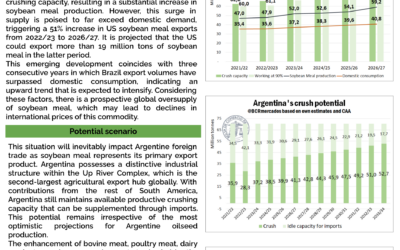
While crushing in Argentina has stagnated over the last 15 years, the growing demand for soybean oil to produce hydrotreated vegetable oil (HVO) in the United States is driving a significant expansion of its crushing capacity, resulting in a substantial increase in...

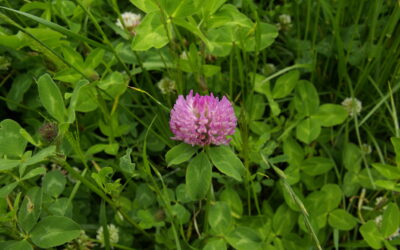
Chemical composition Data in Table 1 show the important differences between typical red clover and perennial ryegrass silages based on observations made in the United Kingdom. The protein content of red clover is 35% higher than that of ryegrass and this allows...
Protein solubility is not a reliable indicator of rumen degradability Proteins in less commonly used grain legumes, such as in pea and lupin, are highly soluble and so the in sacco (nylon bag) technique over-estimates protein degradability because protein...
Outcome The inclusion of lucerne in a grass or maize-based forage ration reduces the need for feeding high protein rapeseed and/or soybean meal to high-performance dairy cows. The beneficial effect depends on the protein content of the grass or maize silage...
Outcome Lucerne is a high protein forage legume that has great potential as a forage feed for dairy and beef cattle and sheep. However, the combination of cool conditions and naturally acidic soils in the wetter parts of the British Isles is generally not...
This article is one out of 15 book chapters. All chapters of the book are available on the Hub. Humphreys, J., Phelan, P., Li, D., Burchill, W., Eriksen, J., Casey, I., Enriquez-Hidalgo, D. and Søegaard Karen (2017). White clover supported pasture-based systems in...
Outcome Soya can be successfully substituted with peas in dairy cows without affecting milk output or compositional quality. However, this is highly dependent on stage of lactation and yield. Pea can be used as the sole protein source for herds with moderate milk...
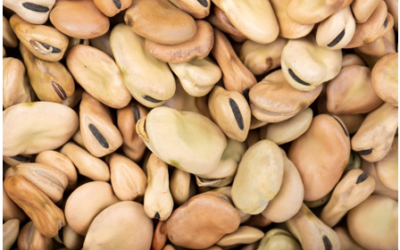
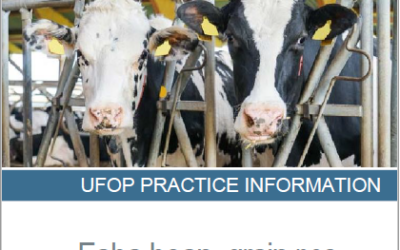
Outcome Soya can be substituted using faba bean in dairy cow rations without affecting milk output or compositional quality. Successful use of faba bean depends on the level of substitution and being able to balance rations to maintain rumen bypass protein...
Outcome Soybean meal can be replaced as a concentrated protein source for dairy cows without compromising milk yield or quality. There may be economic benefits depending on the price of soya and other protein sources. Switching to other high-protein feed...